One of the very few advantages of having to live below the breadline (i.e. on benefits, which I have to do currently due to illness and recovering from surgery) is that it really gives you a perspective on money and what it can do.
I was listening to a radio discussion today where the panelists were talking about the 'credit crunch' (surely this is a term that is already sounding a little old-fashioned, which is apposite because it didn't sound like any of the panelists were actually suffering from the effects of said event). One had a friend who went to Aldi rather than Waitrose and bragged about how cheap the fresh parmesan was. What? These people are suffering so badly that they have to save money when buying their staples, such as fresh Parmesan. Is this the very definition of middle class poverty? Another was talking about buying cheap clothes and, rather than washing them, throwing them away. Her point was that there isn't enough land-fill to cope with all these worn once or twice items.
I'll just repeat what she was talking about; just so we're all sure of her topic. Buying clothes, wearing them once or twice and then throwing them away.
Live for any length of time on what is effectively negative income (benefits never really cover even your basic expenses, they simply stop you from becoming homeless and dying of cold and starvation. Don't believe anyone who talks about the unemployed and otherwise state-dependent being benefit scroungers. There are, of course people who cheat - claiming benefits when they already have an income, misrepresenting their circumstances in order to claim more - that kind of thing. But people who live on benefits live in poverty and I would suggest that very few, if any, are happy. Yes, the cliché of benefit dwelling is that everyone has a widescreen TV, but it was probably bought on unaffordable credit that will follow people around for decades), and you will find that, along with the things that you need and cannot afford, there are plenty of things that you just don't need.
What is clear is that getting more and more stuff is the default setting for pretty much everyone. Before I was sidelined with illness and disability, I earned pretty good money. But at the end of the month it was almost always all gone. Looking back now I can't understand where it went. I don't have an awful lot to show for it. I guess money just flew away in the breeze.
I'm going to go out on a limb here but I think the 'credit crunch' or whatever we want to call the near collapse of the world financial system is just a taste of things to come. It should have signaled a fundamental change in the way people approach matters of finance and economics. But it didn't. I read that the banks are back paying their bonuses to themselves (continuing to use their bogus justifications of staff retention and contractual obligations - all of which boil down to one thing they never say: I am greedy and I like being rich). It's as if I, as a school teacher had managed to make my results drop from a 70% pass rate to a 5% pass rate but then on raising that to 7% demanded a bonus because I was so bloody good at my job. Or a builder who built a bunch of houses that fell down then demanded a bonus because the next couple of houses they built didn't.
We still have some pretty big issues to work through. Starting with oil. Even though there is still loads of oil left, the issue is distribution and the patterns of consumption. Once Africa starts to join in with the global economy (and it will - pretty soon India China and Indonesia will pass from being producers to consumers and everyone will still want their cheap costs and bloated profits) there will be yet another factor thrown into the mix.
Second we have the environment. And this is not just global warming. It's pollution, waste management, natural resource management and all that.
Third we have population - possibly the biggie.
Then we have global health issues/crises.
Then we have ideological differences.
Then we have historical issues. Can a prosperous, educated China keep itself together? Can Russia retain its sphere of influence? Where does Europe end and Asia begin?
I have no idea if anyone is actually thinking about these things seriously or if anyone with any real power is trying to address them. But they should. My instinct is that governments are like any other social structures, in that the magnetism of the pursuit of prestige causes everyone to more or less line up together. Difference is not tolerated and dissenting voices are quickly silenced or discredited. How else did nobody in government spot what was going to happen to the financial system and take early action? Everyone I know with any financial nouse agreed that the house of cards was heading towards collapse and there was little surprise when it all fell down.
I also suspect that electoral politics trumps most long term thinking, so if a maverick voice is allowed to survive, it is quickly drowned out by other noise. After all, electoral politics is about winning elections and pursuing power, and it is easier to trap electors into short term thinking and then feed them news-cycle-long trivial good news, than to actually effect any real change. Why else would America still not have a decent functioning healthcare system?
My point is that I have just not spotted the fundamental shift in attitudes that would insulate us all from a continued cycle of financial aftershocks. There is an argument that the global bailouts were an easy, rather than a wise choice (governments and leaders often spout the rhetoric of making tough decisions and avoiding the easy choices - surprise! they hardly ever walk the walk).Lots of people kinda think that we deserved some pain and that it might have taught us a lesson in what is really important This is actually something that my (and subsequent) generation (s) haven't learned. The generation that is past retirement age either lived through WW2 or it's austere aftermath. Everyone else in Europe and the UK has reaped the benefits of the war generation's sacrifice. Maybe we have all become too complacent. A little pain might remind us how fragile everything really is.
The bonus culture is apparently still standing. The ideology of globalisation and privatisation remains intact. The obsession with targets is undimmed. The radically conservative low tax, small government ideology is more or less unshaken. All the elements that led us into our current states of crisis (prosecuting ideological wars abroad; the economy cannibalising itself like a rabid snake; the arrogance of self-insulation; the trivialising of reality; the quest for stuff) are still there.
Which leads me to think that, as nations, economies and communities, we are bound, like a wasp trying to escape through an unopened window, to continue bumping ad infinitum into downturn and disaster.
It's not looking good for former footballer John Hartson. I do hope he manages somehow to beat the cancer that has struck him down. I always liked him, especially since he was the cause and recipient of my only descent into football hooliganism.
I'd got free tickets to see Bradford City play Wimbledon. It was a real relegation crunch match - the second to last game of the season. It was Bradford's first (and penultimate) season in the Premier League. Wimbledon had been around, defying the odds for years.
So there I was watching the game. I am not a Bradford supporter, but have had antipathy towards Wimbledonfrom their non-league days when my Dad took me to see them play my team Leeds in the FA and they beat us 1-0. It was one of the first matches I'd even been to and theexperience of losing must've scarred me.
Hartson was the kind of player that you hate when he plays for them but you'd want him on your team. His brand of football was full of old-fashioned physicality, aggression and never-say-die spirit. In short he was a perfect member of the crazy gang, even though the late 1980s 'gang' itself had long since broken up and moved away.
We were seated about six or seven rows back, between the goal and the players' tunnel. Bradford were awarded a very generous penalty in the first half, and were winning. But the tension was palpable. After all, 'we' were only a goal up with a player like Hartson on the pitch. All he did to get his two yellows was jump, run and tackle harder and with more desire than anyone else. You could sense his personal desperation to rescue his flailing team, which had been on a disastrous run and obviously had that relegation momentum - a mix of frustration, bad luck, trying too hard and inadequacy - that teams sometimes get. They were on a downward roll. For Wimbledon, their only chance of survival as a club was to stay in the top division. We all know what happened when they did get relegated...pouff!...they disappeared.
As Hartson trudged in front of us, he stopped and turned to dole some verbals to the ref. The Bradford goalie started having a go at him and he shouted back. For reasons that I still don't understand, this got me out of my seat. I skipped the few steps down to the front where one or two people were already standing at advertising hoardings jeering and gesturing at Hartson, who was about 5 yards away. As he turned away from his arguments, I let off a volley off horrid abuse which contained negative references to his weight and hair colour, as well as aggressively attacking his race, and questioning both his relationship to animals and his parentage. I used lots of swearing. Head down, Hartson had begun walking towards the tunnel. But then he stopped for a moment and turned his head, looking me right in the face. His eyes were filled with tears.
Whether he had even heard my abuse, or had turned to actually look at me I have no idea. Similarly, it's probable that his emotions were nothing to do with the crowd but with adrenalin, the anger and disappointment, and the realisation that he might have cost his team the game; the flipside of the committed way he always played. Either way I suddenly snapped out my bizarre state of hooliganism. What the hell was I doing? I would no more indulge in this kind of behaviour normally than join the Conservaive Party and campaign for the beatification of Mrgaret Thatcher. How did my temporary and relatively disinterested support for a team that isn't even close to being my team lead to this? The rest of the stand - committed Brantams all - continued with their jeering and gloating. Hartson's perceived tears made their baying and shouting even worse.
I went back to my seat and watched the rest of the match in a state of embarrassment.
I talk quite often about teacher stress. Recently I have posted about bullying and death. And now this.
Obviously there is no way that murderously attacking someone (if that is what happened here, we always have to take into account the fact that everyone is innocent until proven guilty by law) is a correct response in any situation, especially in loco parentis.
But the surprise is that this kind of thing does not happen more often. In a profession which suffers epidemic levels of stress illness, meltdowns that result in violence are seemingly rare. Without having any recourse to statistics, I imagine that in wider society they are not as rare.
In ten years of teaching (admittedly in challenging inner city schools) I have been punched, kicked, scratched, bitten, shoved from behind, pushed downstairs, headbutted (broken arm), run into (another broken arm), shoved over (broken glasses and sprained knee), stabbed with pins and had furniture thrown at me.
This is just the actual assaults and violence. We can add to this the theft of property, sabotage of classroom work, vandalism of property, threats to my home, stones thrown at the car, threats to damage and/or steal my car, violent encounters with parents, verbal abuse and threats issued in places like supermarkets, pubs and on the streets, as well as an almost constant strain of verbal abuse in the classroom and around the school.
I lost my temper twice. Once I took it out on a table, slamming it to the floor and breaking the top from the base. Another time I took a five minute time out.
But I ended up quitting - caught in a spiral of stress illness depression, panic attacks and disillusion. What might happen if I and my colleagues didn't routinely internalise the violence?
Michael Jackson died from what was effectively a heroin overdose. I cannot understand why some people seem so surprised. It was never going to end well was it?
I personally thought, at the time of his trial, that suicide would be a good way out for him. It's extremely cynical, but it would have been the PR coup of the century, upstaging everything and keeping the legend intact. As it was, he won the trial. And although people aren't talking about it now, the portrait painted was of a person who might not have done anything proven in court to be criminal, but certainly did things that were on the very edge of suspicion, and way over the line that reasonable people would draw(Whatever my suspicions I have to assume that he didn't do anything illegal vis-a-vis any children, given that rumour was never proven legally) I used to think that it was all too easy - to paint Jackson as a victim and use this victimhood to excuse his questionable behaviour. I used to think that if he really wanted, he could have bought anonymity, focus on working out his problems and forget about the spiral of fame and misfortune. I still think that to some extent. Part of this was predicated on my annoyance at the hype. Floating statues of yourself down the Thames and demanding to be called the King of Pop is one thing. Everyone seemingly following and thinking this was normal is another.
I never thought Jackson was, as an artist, as great as they told me. Out of his whole career you could probably squeeze a terrific single CD of music. And the show I saw of his at the height of his megastardom was quite overblown, remote and curiously unemotional. As if they assumed that just seeing him was enough. The crowd went mad, but mainly for the jet-packs, the disappearing tricks and the moment when, after teasing us for an hour, he finally did the moonwalk.
But I think his predicament was more complicated than I liked to believe. When you are the factory, the salesman and also the product it's a pressurised position. Everything depends on you. At the age of six this is hard to imagine. I could barely write my name at the age of six, never mind be the central figure in a huge money making organisation. For Jackson, this all happened before he had the chance to develop a personality and maybe this was why he never had the strength to stop the carousel and get off. And if all the stories and the evidence is to be believed Jackson was the classic case of someone with outstanding talent who suffered rock-bottom self esteem.
And this is the key. One of the main symptoms of low-self esteem is the desire to please others and get their validation. It's even more difficult to step off the carousel when your world is filled with people who make a very good living from what you do. But if you are also crippled with the desperate need to please them then you'd never take the chance of alienating those around you. Even if they are parasites whose opinions actually count for nothing. They know this and use it to trap and control their cash cow.
So, trapped in what is clearly an extremely pressurised and unhappy place - perhaps facing the daunting prospect of the public gaze, Jackson did what many millions of people do. He self medicated. We (the little people) take illegal drugs, drink too much, gamble and indulge in mindless hedonism. Anything for a high, an altered state, escaping our terrible, mundane lives. Some of us go to the doctor and get Valium or Prozac or Temazepam.
Jackson didn't go to a dodgy house in a seedy part of town or cruised the corners for a hit. No, he's no Bubba. With half a billion dollars in the bank you can afford a private doctor who'll prescribe you the drugs you want. But the effect is the same. If you don't learn to live without the medication then sooner or later it'll kill ya.
I am pretty angry that the BNP seem to be gaining political credence and cannot understand why they are not simply a banned organisation. The establishment seems to bend over backwards to make sure they have a voice - which is odd, because we have fairly robust anti-racism laws that are quite regularly enacted - like when we banned that Dutch lunatic with his silly little film. I posit the question: why is Nick Griffin not locked up?
But my disquiet at the BNPs electoral success does not mean that I recommend anyone frenziedly punch Nick Griffin repeatedly in his smug, cretinous racist face. That. of course, would be wrong. I also don't think it's a good idea for people to bombard the BNP offices with envelopes of white powder, or set up DNS attacks on their computers, or issue an avalanche of bogus threats that might lead to the building being evacuated several times a day, repeatedly slash the tyres of the people who work for the party, or plant Saudi and Pakistani flags in every garden on the streets where they live. Of course, all of those actions would be wrong too. I also would come out against cramming up Griffin and Bronzes' appointment books with asylum seekers asking their advice on immigration issues, Muslims who are seeking a voice against Brussels bureaucracy, and black people insisting on their right to representation. That, of course would be unhelpful and nobody wants to make a mockery of the fact that single issue racist bigots have demonstrated their hypocrisy by peddling fascist ideology through representational democratic means. It would make Griffin and Bronze and their childish, moronic little cronies look like foolish, gormless little shits.
It think it was William Burroughs who wrote about bigotry by stating that the only way to change a bigoted mind is to destroy it. I'm paraphrasing but basically he recommended shooting bigoted bastards in the head - hastening nature's work for the good of everyone. Clearly this is an extreme and illegal thing to actually do, and I would never wish to promote it.
I don't know whether bullying affected with my pal and former colleague Kevin, who died yesterday. I imagine not. But stress - that's another issue. Kevin was 52, and all the signs point to a heart attack being the cause of his death. Yet another school teacher whose years in the job ultimately paid him back. He was a good guy and shall be missed.
I know personally what it's like to suffer bullying at work in a school. In fact, when I think about it, I know too many teachers whose lives and careers have been affected and sometimes devastated by the appalling behaviour of colleagues. Often, it seems that teachers who are suffering stress are targeted, somehow nominated as weak and pushed out of their jobs. The deep irony is that those teachers I know who have ended up ill with stress, at the end of their tether or just worn out are the ones who really care about the children in their care. Invariably the bullies are self-serving and the kind of bad teachers who also damage the education of their charges and the standing of their profession.
I myself was piled on with work and extra pressure as a response to me having time off with stress. Like sharks smell blood, the management, rather than address what had made me ill (i.e. their poor management of my impossible workload) they seemed to decide to pile on more work and responsibility. I tried hard, because I felt a responsibility to my pupils, to their grades and futures. But it was too much. I no longer teach.
A good friend of mine, also a superb teacher was targeted in his school. His results were consistently excellent. New management wanted him to achieve the same but with less time and fewer resources. When he couldn't the criticisms, undermining and questioning started. Observers were sent to his lessons, he was placed under constant scrutiny until he just decided it wasn't worth it. Another friend of mine who worked hard and cared about achieving excellent results for her pupils was not alone in applying for new jobs but being told explicitly that she could not leave. Whilst not being offered any opportunities within her school she was told by the head that he would give her poor references and deliberately block her attempt to leave. If she brought the Unions in that would simply give her a reputation and add to her unemployability. The real issue was that he didn't want to lose a high achiever but had managed his resources and internal promotions so badly he had nothing to offer her as an inducement to stay. Eventually she got out and is dong well, but another friend placed in a similar situation ended up with stress illness and left the profession.
I could go on. I could list the people with alcohol or drug problems, the people whose marriages are in tatters, the people who suffer ulcers and IBS, those who have committed suicide. All of them the victims of bullying campaigns either from specific colleagues or in an institutional sense, by blockheaded and arrogant managers.
Britt Pilton was probably the victim of both of these, a staffrom bully and a lazy and incompetent management who failed to deal with it.
Friday, May 01, 2009
'time for me to go away...I'll get a new name, I'll get a new face...'
It feels like time for me to take another short break. Earlier this year I took a week or two off due to an operation. This time, it's because I have just run out of things to say for the moment.
That's the problem with having a life as narrow as my walls. I am currently more or less housebound awaiting a major operation and my horizons have shrunk to almost zero.
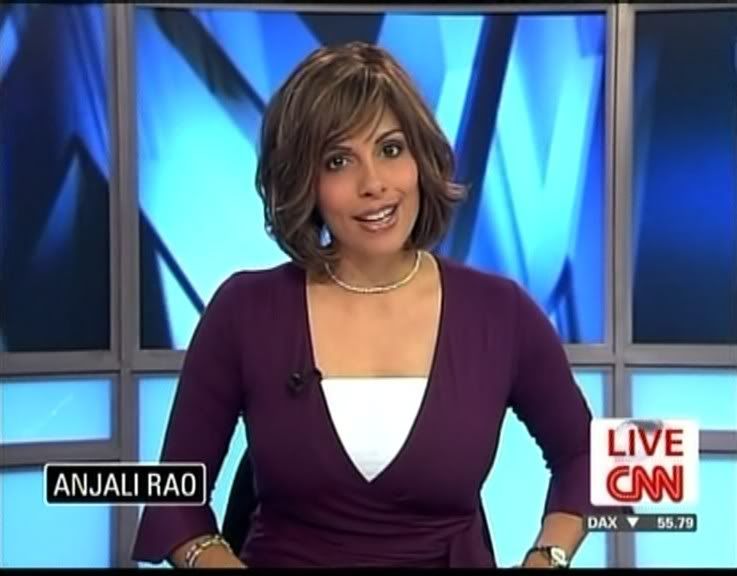
This means that communication with the outside world occurs through the radio, TV and internet. Because the realtionship between people and media is two-way, I find they have kind of sucked the life out of me. I might still switch on Kristy Lou Stout at midnight, but tend to watch with the sound off, looking at her beautiful face (it's like it's been naturally Photoshopped to be flawless). Because it doesn't matter what she says, in her intriguingly adenoidal voice, she just repeats the same news I have been bombarded with all day. The only reason to watch her is because she is much better looking than pretty much all other purveyors of news - although Anjali Rao runs her close.
Eventually, all TV and radio blurs into noise and begins to reveal itself as shallow and formulaic.
People (by that I mean this person) were not designed to do nothing, or indulge in only passive activity. But given the fact that I cannot walk and am in significant constant pain that is where I find myself. Until I had to quit work I was one of those people in one of those jobs who would often work evenings and weekends, and even if I wasn't working but at home I would never switch on the TV upon arriving home and only switch it off at bedtime. I'd tune in when something I wanted to see was on, then read or listen to music or do something in a "Why don't you...?" kind of way. Downtime means nothing if it stretches out in a horizonless desert in front of you.
It IS true that the more you do the more you do. My days were full from early morning to late at night, leisure and passivity only one element of a range.
But I am forced into doing nothing and this has left me feeling socially and intellectually undernourished with no social or intellectual energy.
Here's another thing. There is so much to think about that I am recently kind of given to consuming but not fully processing. The economy, the fact that we're all doomed by whichever means, personal thoughts triggered by my disability and situation, whatever else.
In the end you just wither. I have worked with unemployed people who were frustratingly free of motivation and hope. However, I get it now. Your ability to see brighter times ahead is limited by the inability to see any diferentiating lines between the past, the present and the future. Weekends to me mean nothing. Any attempt at weekend activities are merely symbolic.
And then, for me, there are the drugs. They are pretty good at slightly dulling the pain, but leave my sleep patterns destroyed and my head full of soggy sponge.
It's quite nice in so many ways. Comfortable numbness is often what we crave and I have it. I can fall into a trance-like daydream and live out some delicious fantasy several times a day. I look at complexity and my brain just shrugs and turns away.
And everywhere the internet is full of opinion and comment. It can do without mine for a while.
Here's what I don't believe. That all politicians are self-serving, superfluous vermin. Of course, some of them are.
But some journalists are, as are some welders, some cheese-makers, some zookeepers, some everythings.
But to look at the press recently, you would think that our current government is morally bankrupt. There is, of course, no perspective involved when people announce this conclusion again and again. The fact is,there has been little abnormal or unexpected in the Blair/Brown government. In fact the number of people caught in financial/sexual scandals and botched cover-ups has been remarkably low.
The thing is - giving a brown envelope of hush money to the madame of a brothel, whilst proclaiming outrage at the country's moral decline is worthy of comment. Having a husband who once watched a cable TV porn film whilst not passing moral judgement on other peoples' sexual behaviour is not.
Similarly, is anyone surprised that political advisers might shoot the breeze making up smears about their opponents. even if I accept that Damian McBride was serious and not just having a private joke (which I don't really accept, given that there is no evidence of it), is there any shock involved?
The sight of tabloid journalists and editors jumping desperately on the bandwagon of mock outrage is funny and unedifying. How terrible is it when you are smeared? Ask Robert Murrat, or anyone who has been trapped in the tabloid sights and shot down for fun and profit.
Each and every minor incident is blown up out of all proportion. MP behaviour consequently is like those massively magnified pictures of bed bugs or fleas. They look scary until we realise that they are microscopic and harmless.
The accumulation of all this : the 'scandal' of MPs expenses, the ridiculous focus on every questionable aspect of politicians' behaviour is to create a mythic truth. An accepted wisdom that all politicians are self-serving vermin.
Like much of what's passed off as news these days the story feeds itself. Questions are asked..."Send us a text, call up if you have something to say about this scandalous behaviour". Suddenly what the media thinks becomes what the public thinks.
That section of the press that operates by preying on peoples' bitterness and sense of failed inadequacy kicks into action. 'They' are doing better than you and it must be by cheating. (see also immigrants sponging off our welfare, teachers sitting with their feet up whilst everyone else is at work, celebrities overpaid for having no talent)
Another fine example of this is the policing of the G20 protests. One policeman pushed Ian Tomlinson to the ground and by dint of awful luck it looks like it might have led to his death. One policeman hit someone with a baton, one other used his shield as a weapon.
All of these incidents look pretty appalling and, of course, should be properly dealt with.. But that's three out of several hundred or even thousand police. There is no focus at all on the successful, non-violent cops, who were seemingly in the the vast majority.
And the spin machine - eager to turn the page, draw a line and avoid negative stories lasting for more more news cycles then absolutely necessary - responds.. Action is taken. Reviews are announced. Rules are changed. Legislation is proposed. Anything to make it go away.
Real scandals are rare. We should beware the media created variety.
One of these is good and should be encouraged. The other one bad and people should really stop doing it. I'll leave you, the world, to work out which is which.
And by the way, if you follow a church that tells you that condoms are a mortal sin, whilst you, your family and your people are dying of AIDS, perhaps it might be time to consider whether your church really does have your best interests at heart, given that they might be putting dogma before your survival. Just a thought.
Now the secret's out and everyone is declaring The Wire as the greatest TV show ever made (TM) it's hard to review it. If you agree with the evangelists then you are just going along with all the critical tossers who jump on any bandwagon. If you disagree then it appears wilfully contrary.
The truth is that over 5 seasons the Wire was superb. This was mainly because it used the TV format properly, realising that everything doesn't need to be explained and tied up by the end of an episode (this is the reason that I donlt like CSI - there is far too much basic explanation for audiences that don't/can't pay attention), and that effectively they are telling a 60 hour story, rather than 60 hour long stories.
This is why people are evoking Dickens, in that The Wire is quite happy to switch through a tremendous amount of characters and places to build up a multi-facted and complex portrait of a city. It's a pretty lazy comparison (maybe Ulysses is a closer model), although the writing does follow the rules of the novel rather than the rules of TV. The writers are also happy to spend hardly any time at all explaining things that have already been shown, or recapping things on the assumption that people have the attention span of a fruit fly.
This does not mean that The Wire is without flaws. Seaon 5, for example, was pretty odd plotwise and only the goodwill from watching the previous 4 seasons allowed me to forgive the bizarre contrivance of McNulty's 'scheme', or the fact that we were suddenly introduced to the staff of the paper and not given enough time to get to know them.
However, it is a measure of quality that there were no episodes that were bad, or plot turns that were fatal to the over-all effect. How many episodes of the Sopranos were forgettable or unwatchable? I can think of maybe three out of 150 or so West Wings that were poor or indulgent.
Like lots of Brits I am very excited about having one of America's most prominent people visiting our country. Katie Couric is obviously here to cover the G20 but is welcome to drop in on my house if she can fit me in her schedule.
The BBC has finally got it's finger out and has started showing The Wire. It's funny, British TV just doesn't seem to be able to cope with the best of intelligent American TV. It never knows where to put it, especially with comedy but often with drama too. Seinfeld was bounced all over the place for years and never really got an audience here. Now the same fate has befallen Curb Your Enthusiasm - finding it is like finding a reliable stock option. The Wire found a place on the FX channel but was snuck out and got a pretty poor audience. ITV was pretty brave to buy Dexter but then couldn't decide what to do with it.
Which, in some ways is good, because we get to watch these things on DVD. Over the past couple of years critics have increasingly drooled over The Wire (I guess they got to see it) and there has been a groundswell of TV aficionados lending each other box sets and setting up informal discussion groups.
Because for really great TV drama, it turns out that DVD is the absolute best medium. The West Wing - which I still nominate as the best network drama of all time, is 41 minutes per episode. Hardly any longer than a traditional BBC sitcom. it's hard to wait a week for such a small portion. But on DVD over 24 episodes it's a different story. You can watch episodes in chunks, or even treat a season as a holiday from real life and normal TV. Myself, I can do 14 hours straight - no problem and get through a season in a weekend.
But it's not only the flexibility of watching options that make DVD the best place to catch your drama fix. The best of TV has production values that are pretty much equal to film. In fact, the only difference seems to be the gratuitous use of expensive CGI in almost every movie released these days, as well as star salaries that make Fred Goodwin's pension look like parking change in the well of the car.
Who wants to watch broadcast TV when you can get 5.1 surround, digital picture beauty from a DVD? Tonight's episode one of The Wire broadcast on BBC2 looked like an American TV series - a little too brightly coloured, a touch fuzzy round the edges, the sound compressed into a gluey, syrupy centred noiseHow ironic. TV that suffers from being broadcast on TV.