Wednesday, August 03, 2011

today : 90 degrees in my shades


Today it was 88 degrees in my kitchen, which for England is pretty hot. Summer is erratic and often very short and it always amuses me that we complain when it gets really hot, just as we complain when it gets really cold, or when it is neither especially hot nor especially cold. We also complain when it rains, or not.

But I am out of step with other Brits. I love it hot. As hot as possible please. If I was (and sadly, I am not) the person who won £161 million on the lottery the other week (and there's none of this American lottery nonsense where you get it over 20 years. Here it's one of those oversized cheques in a single beautiful chunk) I would instantly move to somewhere like Santa Fe for the dry heat and/or New Orleans for the humid heat, holidaying in Calcutta, Rio and North Africa for a change.


Anyway I am not even going to pretend that I am not , in part, using the heat as a rather feeble excuse to post pictures of Claudia Cardinale modelling various items of 'summer' clothing.

Thursday, July 28, 2011

today : tweet tweet


where do all the tweets and texts go? More and more tv and radio shows spend more and more of their time imploring viewers and listeners to tweet and txt. its a kneejerk part of any show now, despite the context. at the weekend i noticed, in between the uncomfortable and intrusive questions to survivors of the norway massacre (how did you feel thinking that you were going to die? by the way, what was it like to watch your friends be murdered in front of you?) the news folk begged us to send our thoughts by twitter and txt. what did they expect? later on, a couple of comments were read out. people felt sad for the people who died. one or two were angry at the guy who did it. surprise.

If someone did manage to send in a detailed and insightful comment it would never make it to air. ok, i get it on the radio. lauren laverne asks for people to request their favourite recent track. Fine. sometimes a pithy topic of discussion crops up and listener contributions add to the flavour of a show. but asking people to comment on an unfolding big news story with scant detail is just pointless and bizarre. what possible contribution could they make? and what happens to all the tweets and emails and txt that are sent and posted but never make it to air?

Tuesday, July 26, 2011

today : instant classic


According to what I read, John Grant almost gave up on music and on life after a crappy run of luck. But he didn't, and his album Queen of Denmark is terrific - not been off my Dansette for months. This song, in particular - especially in its long form, is an instant classic. As good as anything I've ever heard.

Sunday, July 24, 2011

today : twaaannnggg!!! (reprise)


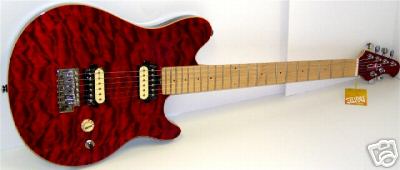
My Semi-Acoustic got a new set up and a set of flatwounds. Money I can't really afford. So sue me.

Thursday, July 21, 2011

today : I put a dollar in one of those change machines. Nothing changed.


One of the things, as a Labour supporter throughout the period of the last government, that I was always reluctant to do was to openly criticise them. This, on the the grounds that I knew what the alternative was, and Labour plus imperfection and mistakes always always trumps the Tories.

There were three main areas where I thought they fell down. Iraq, obviously. You can argue they had no choice but to follow Bush but in the end the whole thing was monumentally stupid. Then there was their puppy-dog overenthusiasm for things like databases (I always think the plural should be databii), surveillance cameras and all that stuff. Not only is it ideologically dodgy to go all Patriot Act on the asses of the innocent public, but these things always cost stupid amounts of money and rarely succeed. The NHS database, as an example, was a lovely Utopian idea but was ill-executed and ended up as a hideously costly failure that everybody but the people in charge could see coming a mile off.

But even in the heady days before Iraq, I was always critical of the way New Labour seemed to pander to the media. There was a desperation to control the news cycle which led to many hasty policy ideas and, ultimately a scatter-shot approach to policy that left too much important stuff undone or half-finished. It also seemed to be that lots of more radical and interesting policies were put into turnaround or watered down at the behest of the media. In some ways they can be let off the hook by dint of inexperience. New Labour were the first government to operate in the 24hr media world and also the first to live in the internet age. As the media world expanded so explosively, it looked like they were trying to corral it all. It ended up looking like someone trying to herd flies or someone trying to catch a thousand ping-pong balls and hold onto them. And after 20 years of relentless attacks on the left by the press, who could blame them if they convinced themselves that they needed to court the newspapers.

Recently, some people have been saying that this wasn't necessary, that the Sun never wot won anything on its own. But when you have 6 major newpapers against you and only one consistently for, then perhaps you have to try something to reduce the effect.
In this climate the power of the press expanded to fill the gaps in competence and experience. The problem was that nobody said "Enough", the more the media tried to undermine, the more Labour tried to pander. More than once they back-pedalled. More than once they looked weak and foolish.

The 24hr news media still rely too much on the newspapers. Despite TV having 70% of the news market and the Beeb having 70% of that, even the BBC uncritically follows the front pages of some of the most agenda-driven and politically biased papers. It's not often that the Beeb creates the news agenda anymore. Occasionally they'll do a Panorama that enacts some small change, but even Rough Justice is long gone. Turn on News 24 and there is almost no investigative element to the journalism. They read out the same newswire reports, recycle the same stories as everyone else, and use the same small coterie of experts and commentators.

Knowing that nobody else is stepping up to take the lead puts power in the hands of the newspaper proprietors, whose ultimate job is to sell newsprint, and not really be custodians of balance and democracy.

A great example of this is a kind of non-political story: the MMR/Autism controversy. The newspapers went crazy over the story without ever checking the facts. They know that fear is an easy selling tool. It served their agenda of attacking the government and pressuring Tony Blair. on MMR they could attack at will because no government was going to change their vaccination policy in such circumstances. The Mail and The Express lazily live off health scares and/or miracle cures. But this time, even the broadsheets and TV jumped in, middle class journos caught up in the paranoia of not producing perfect offspring. The result : almost an entire generation of middle class kids unvaccinated and an pointless surge in measles. It's killed some of these very children, whose parents are, in the end, little different from those who swallowed the evangelism and fed their kids the Kool Aid at Jonestown.

The other thing that has happened is that the papers as a whole have enjoyed free reign to bully whosoever they please. Politicians are wary of criticising the papers because they know that the papers have files on them, or might stop at nothing to relentlessly smear them - smears which echo unchallenged across TV and radio channels. Therefore their only option has to cosy up. Keep your enemies closer.

On the surface it seems that recent events have cracked the press/police/politician nexus wide open for all to see. People are calling left and right for reform. But even if Murdoch's influence declines (after all he will retire/die eventually) let's remember to revisit the media/politics/police relationship in a few years time and see what reforms have been successfully enacted, and how things have changed.
After all, three years later and the banks have paid themselves 14 billion quid of bonuses out of our pockets. Whilst surviving on our cash, they still believe they are so clever that they have abolished debt liability, still poise themselves to feed like vultures on the very economies their actions put in peril, and still celebrate their imagined profitability at the end of each day with bottles of vintage Bollinger. Root and branch reform was mooted, and then promised. To qoute George Carlin. We put a dollar in the change machine and nothing changed.

Monday, July 18, 2011

Sunday, July 17, 2011

Thursday, July 14, 2011

today : The Laughing Policeman


I was thinking about this today. It's funny, sinister and quite bizarre.

today : Go Gordon


I always thought that it was a mistake for the spin-doctors to shackle Gordon Brown's streak of righteous anger. He is always ay his best when raining Presbyterian fire and brimstone on the head of injustice. One of the few politicians who I believe is driven by ideals rather than pure self-regard.

And finally, he looked the bullies in the eye and unloaded. Ironically, his critics are still in the mode where everything he does is worthy of ridicule i.e. the line pushed by Murdoch's press and then echoed by the rest of the kow-towing spineless news community, but he was spot on the target and delivered the kind of missive today that, had it come 18 months ago, might have won him the election.

Saturday, July 09, 2011

today : i visit a farm


So anyway, I started to go to a Farm Shop instead of the supermarket for some things. It is not some kind of trendy Sunday supplement fashion thing - there is a Sunday Farmer's Market near my house, but it's overpriced and attended by people who drive big German 4x4 cars and have nannies for their children. It's my sister's fault. She gave me a slice of pie. It was home-made chicken and ham from the farm shop. Unlike most pies that contain mainly air and a kind of ill-defined reclaimed (now I don't have anything against reclaimed meat on principal. If you eat the rump then you should be prepared to also eat the cartilage, eyeballs or whatever) mush, this pie was stuffed full with big chunks of chicken and tasty pieces of smoky ham (you get a gratis pot of chicken gravy with it too, rather than them put the gravy inside the pie). There seemed to be nothing reclaimed about the meat in the 'Farm' pie. In fact it looks and tastes like the opposite: extra-virgin cuts with proper chickeny texture and flavour.

I am really not a big eater of meat. I can go for days without touching it. I can't remember the last time I ate an actual roast. Occasionally I'll get a lamb chop, chicken legs, a bit of bacon or a steak but I never even did that 100 ways to cook mince thing with mince. One of the main reasons is that meat is so goddam expensive (compared to standing outside the gates of the posh houses and waiting for them to throw pieces of dripping-soaked stale bread). And supermarket meat is often of variable quality. You can get a tasty steak but are just as likely to get a fatty stringy one.
I also never buy cheap cuts of chicken. My strong suspicion is that caged chickens spend all day mouldering in their own shit whilst being pumped full of who-knows-what. And you can tell. Just break the film on a cheap pack of chicken and breathe it in. It's rank. It smells of chiken shit and who-knows-what. And the best flavour you can get after cooking it is no flavour at all.

So anyway, I wanted some eggs and dropped into the farm shop. My first thought was: 'why am I buying 6 free-range locally produced eggs at the supermarket and paying £1-70?' At the farm £1-70 gets a dozen. And they are locally laid in a field round the back by grinning chickens who frolic away in the open air and only go inside to replenish their Pimms and Lemonades.

My second thought was to buy an invitingly crusty chicken and ham pie. But I got 2 because they were very reasonable. Then I thought I might like to do my world famous North African-style lamb with steamed vegetables and cous-cous. Really it was an excuse to buy a couple of lamb steaks, because they were less than half the price of the supermarket. It figures. The local supermarket flies them from New Zealand, which is just about as far away and jet-fuel heavy as you can get. Unless the farm is an elaborate ruse, the sheep bleating away in the surrounding fields were within walking distance. I guess they might not be the actual sheep that I would be pan-frying (why 'pan'-frying? is there some kind of way of frying something that doesn't involve a pan?) the next day, but there's a good chance they are.


Then I spotted some locally made cheese, a freshly baked quiche, a piece of fillet steak, golden brown pork pies, home churned ice cream and myriad other hearty delights. My eyes were bigger than my wallet, but even though I was light on cash I still left with quite a hefty bagful of stuff.


And of course, when I got home there was no room in the fridge or the freezer. I have one of those English-sized fridges that are designed for our miniature over-crowded houses. An average American would spontaneously guffaw at the comic dinkiness of them. Like a fridge, only much smaller. I also have a freezer of similar stature.
So I was stumped.

Either I would have to cook an immediate multi-course banquet of delicious farmhouse fayre, or re-organise things somewhat. After a careful half-hour of ergonomic calculations and selective fridge and freezer rationalisation (bye bye plastic containers of leftovers, undrunk cheap beer, year-old frozen spinach, unused bags of ice-cubes and my trusty 2lb bag of frozen peas that has for two years or more only ever been used as a cold compress for my ailing joints before being returned to its icy home for re-cooling), I'd created enough room for the extensive farm-purchased food. It meant cutting the pies into manageable slices and individually wrapping them.

Later, I concocted my world famous North African-style lamb with steamed vegetables and cous-cous, and the farm-bought lamb took it to another level - inter-galactically famous, perhaps. Don't get me wrong. The supermarket lamb is almost always okay. But the farm-bought lamb was twice as tasty and twice as tender as any I've ever bought from the supermarket. I am very careful to make sure I have plenty of freshly grown herbs and garlic for such a cooking eventuality. I even squeezed fresh lemon juice. So why ever did I cook such a thing previously, knowing that one of my main ingredients was supermarket sub-standard?

I don't think there's a particular moral to this story. Maybe that people who don't personally know me might regret not being amongst my close circle of family and friends who have direct access to my world famous North African-style lamb with steamed vegetables and cous-cous. Perhaps it tells me how easily pleased I am. Maybe it is to re-inforce the truism that quality ingredients are the basis of any quality meal. But in the end it probably says something about how easy it is to be lazy and sloppy about such things as where you buy your food, and the tiniest bit of effort in such areas can increase the quality of a person's life by an immeasurable amount.

Thursday, June 30, 2011

today : Public apples/Private oranges


I've heard a ton of guff about the fact that public sector workers should have the same kind of pension and salary cuts etc as many in the private sector have already suffered.

As usual, the people who trumpet this nonsense are driven by ideology. They use their bogus arguments always to shadow their real intentions. Do we want a race to the bottom? It seems that they do. They always, remember, start from a standpoint of hating the public sector. After all - those who are generally making and promoting these policies and ideas don't need public education, health, transport etc, as they are very very rich. Public services are there for the little people and from inside our gated communities and behind the tinted windows of our Maybacks, we try not to have anything to do with them, never mind caring what they think or how they live. Remember, if the economy does well or badly we set the system up so we cannot lose. We bet on either or both outcomes so even if our game-fixing somehow doesn't work, we still cash in.

The difference with the public sector is that people join it knowing, not that they will be paid poorly, as wages themselves are often equivalent, but knowing that there is a limit to their advancement. They trade-off job security and a secure pension for the limited opportunities to earn big money.

The private sector has no theoretical limits, and operates on a simple risk and reward basis. If you want to become a multi-millionaire or billionaire then you can. But if you are a nurse or an ambulance driver or a teacher then you settle for some level of comfort and security (perhaps also a measure of altruistic fulfilment) in return for abandoning such limitless ambition.

Of course, this necessitates a structure within which complacency can flourish. I strongly agree that public sector institutions need to tighten up and be more efficient - somewhat more connected to the real world than they often are. I've worked in the public sector most of my adult life and seen some horrendous incompetence and profligacy - health administrators ordering taxis to travel half a mile and paying people to polish and water the office plants and schools that in difficult places, make no effort or spend pots of cash on inappropriate schemes and initiatives that only exist to look good on a manager's CV. Example : the deputy head-teacher who uses the school to pay for their Headship qualifications whilst doing as little as possible in their actual primary job, the new head who buys 300 computers without backing them up with maintenance contracts or staff and student training, or school that spends a lot of time, effort and money in manipulating the league tables rather than spending similar time effort and money on getting their results legitmately by actually teaching the pupils.

Sometimes, in the case of the schools and health especially, organisations and institutions have to be, what would be called in the private sector, loss-making. You have to give chemotherapy to a frail elderly person or weak and damaged baby, despite their percentage chance of survival. In the private sector that would be seen as throwing good money after bad. In education, you cannot give up on a single child. Let's also remember that, as we are reminded too rarely, that the school system is first and foremost a 'free' nationalised childcare facility. You can't just shut the thing down without a huge knock-on. But in the private sector a school that shows no improvement in results and seemingly shows no return for any investment would be gone in a heartbeat.

It is fine to try and improve the less efficient aspects of public services, but fundamentally I believe that a modern, decent society should show them (and more importantly the servants themselves) a healthy measure of respect. Using public servants as an easy target for cuts, seeding the press with stories that fuel jealousy and anger and making bogus comparisons with some mythical private sector is the opposite of this.

Wednesday, June 29, 2011

today : bad apples


ipads are stupid and I hate them. Actually I don't hate them at all really. And they are also undeniably a miraculously clever invention. They are another example of how actual things are now seemingly outstripping the sci-fi predictions of my youth.

But watching Sky News in the past couple of weeks has made me notice something. What are stupid and hateful are the people who wave their
ipads around, showing them off. One or two of the presenters on Sky do this during the late-night paper review. Obviously they have a new thing where tomorrows front pages are now stored on an iPad, connected to the screen behind them. As they move through the stories and discuss them with whichever guest (they have pretty good guests most nights), they can control what appears by using their iPad rather than having some technical boffin in the gantry do it for them. I guess the presenters have all been given a shiny iPad. Some of them can't help but blatantly angle them towards the camera and make very obvious iPaddy gestures. Sometimes when they are scrolling or resizing a picture the camera gives us a close up of fingers on screen. They might as well have a t-shirt that says 'iPad Owners Club' on the front.

The same thing happened with the F1 coverage on the
Beeb last year. That guy who's like a Blue Peter presenter who presents it, insisted on walking around with his iPad on show, until a certain point arrived when, either he realised that it looked stupid and childish, or someone from the Beeb got nervous about product placement and confiscated it.

I've seen this a lot in the past. I was a teacher during the original rise of the mobile phone and most children, upon getting one, would find any excuse to wave it around and show off. I expect this from children, but when the
iphone appeared this behaviour broke out among adults too. Any visit to the supermarket or a coffee shop meant negotiating people pointlessly waving their iphones around whilst clogging up the town. Notice how they never call it a phone, but make sure they use the word iphone. It's a phone, and tell me how many of the hundreds of 'apps' on yours you actually use regularly, and how many are sitting there - 99p wasted? Apps are the new ringtones. Eventually people grew up and realised that variations on the sound of a phone ringing was quite adequate enough thank-you.

It's clever of Apple to harness this childish impulse towards one-
upmanship. Coupled with the quasi-cult religion behaviour amongst Apple fans, it puts almost a mystical air around their machines. This I can kind of get. The machines themselves are pretty brilliant and unbelievable expressions of technology. But I personally am baffled by the shots of gawky bespectacled boys sleeping on pavements in order to be the first to pick up a new Apple gizmo. What's the point in having 'face-time' in your pocket when you don't have an awful lot of real friends?

I'm stereotyping nerds, of course. Which is unfair. But actually, nerds aren't the issue. They'll always go for the next latest gadget and endlessly discuss it with other nerds. No problem for the rest of us, and possibly an essential part of the leaps forward technology is making in recent years. The problem is the try-
hards, the self nominated fashionable and cool people. Because all this boils down to what's considered cool.

Like the Apprentice style business-suited woman in front of me in the queue for cigarettes today in the supermarket. Shouting into her
iphone like Dom Joly's mobile phone man, I noticed she mentioned the fact that she was using an iphone twice to the person on the other end. Unless it was being conducted in code and she was some kind of Anna Chapman figure, the rest of the conversation did not seem to be of any consequence. At the counter she put her phone onto speaker, placed her iphone on the counter ("I'm putting my iphone onto speaker") and continued to shout at it whilst she bought a single can of Red Bull and paid for it using a credit card. Everyone in the queue crossed their arms and tapped their fingers as she continued to juggle the conversation, entering her pin number and putting her card back into her bag. Finally she finished and I quickly bought my cigarettes. On the way out I passed her. She was now standing still talking into her phone.
"Okay, see you in two minutes. I'm heading back to the office now." she said.

Saturday, June 25, 2011

today : Greece is the word


You can't blame the greeks for rioting and getting upset (it reminds me of the old joke 'What's a Grecian Urn? Answer: these days not much at all"). After all, they didn't really do anything wrong. This is almost always the case with the population of a country. In the UK public service workers are facing slash and burn cuts to their pensions (although this is an ideological thing that also happens to help cut public debt - like all the Tories' policies. They are driven by ideology first and any notion of national interest second).

There are two ways that people and nations get into unmanageable debt. The first is if they behave fraudulently. But the main one is when they behave like sub-prime shopaholics. Speculative lenders continue lending to them - which they seem to often do even when the sums don't add up and the loan is more risky than becoming Spinal Tap's new drummer. Of course, in recent years the lenders convinced themselves that credit default swaps abolished risk, so they simply ignored the sums.

One wonders, why they continue to hurl money at obvious bubbles and economies that are on ther brink of collapse? It's not like it's a new phenomenon.

S'funny, but when it all goes wrong, as it repeatedly does, I am not seeing many lenders taking the hit. Their hair remains resolutely lengthy. It's always the lendee who loses. In the case of countries, it's the taxpayer: always the taxpayer (never the tax avoider who shelters their assets offshore and has a team of people from accenture to minimise 'liability').

The super-rich speculative lenders know this. They know that when it all goes mammary-skyward, the IMF will come along and do their bidding. The first people to get paid are always the super-rich. God forbid if they should actually ever lose out, so they skew the system to keep themselves rich, even whilst convincing themselves (or trying to convince the rest of us) that the market is 'free'. It is the belief that they are secure and living above risk that feeds the frenzy that inevitably creates bubbles in property and stocks, dragging the rest of us poor saps along. The super-rich feel that they are entitled to make more money out of any given situation, however dire. Hence the fact that the investment banks bet on their own failure in 2007/8.

Meanwhile the little people - you and I, dear reader - are squeezed like the lemons in a Wimbledon debenture holder's Pimms. Why are we paying more for food and fuel? Well, rather a lot of money was 'printed' to keep the system flowing i.e. to help the speculators keep their money-making schemes afloat (a bit like the house advancing credit to a rouletteer whose luck is about to turn, honest). The speculators had killed their preferred equities and property markets as money-making prospects, so they instead looked at the commodities markets. They took their free money (as kindly handed out by treasuries and central banks) and started to gamble it in wheat, oil, macadamia nuts and, I guess, pickled onions, precious metals and Stinking Bishop. It created a bit of a bubble, not dissimilar to footballers wages and transfer fees. Commodities are now overpriced, which means less for more for the rest of us and a consequent push back towards recession, which will lead in turn to more over-leveraged governments struggling to pay their bills as their welfare tab goes up and their tax-take goes down. In the meantime the super-rich will take their free money and start attacking weak currencies, which will further push countries towards bankruptcy by doing things like making oil really expensive. They'll also use the money that the governments gave them to lend back to the governments at an inflated rate of interest (wasn't it specifically the money lenders that Jesus threw out of the temple?).

But none of this will matter. Many speculators still believe that all they have to do is off-set their risk by using the magic of their own genius made up sums.

And even if they get it wrong and end up in trouble they know that the systems of 'rescue' are not there to rescue countries and their people, but always to rescue the wealthy investors' money.

The job of the rich is to stay rich and get richer. Everything they do is towards this end. They spend some of their money making sure the law is there to support their aims by strongly influencing (incentivising politicians with campaign donations, the possibility of negative media coverage etc) governments to skew the rules.

This is why there will be a bailout of Greece, as there have been in Ireland and in the past some of the Tiger economies where a trumpeted economic miracle fell flat on its arse. If Greece does default, it is not really the Euro that will be a problem - Greece will have to revert and everyone else will carry on with the single currency project. What would be the problem is that all the gambling investors would lose their money. And that simply wouldn't do. So the not-so-rich taxpayers of Greece and the rest of the Eurozone will cough up, as they always do, to make sure the rich remain rich.

A cynic might see it as a legitimate tactic. A couple of Davos summits later and the super-wealthy get a guaranteed payback from the poor, and as a condition of not going bankrupt Greece (or whatever country) has to privatise its publically owned assets - by selling them to... the rich. Taking things ostensibly owned and controlled by the average citizens and placing them in the hands of a wealthy few. Shock horror.

Tuesday, June 14, 2011


If I talk about fuel prices, and the fact that they are insanely high, I am aware that I am probably nailing a moment in history. Looking back in a few years time, it's inevitable that the outrageous 75 quid a tank will seem laughably cheap. Or maybe we'll look back in nostalgia at the time when when cars still required petrol.

I would have liked to get an electric or a hybrid vehicle this time. But the backward looking inertia of the motor corporations mean that they are still specialist vehicles with specialist price tags. Did they not employ people a decade -two decades- ago to develop the future? Everyone knows that in business the secret is to be ahead of the game, and it's been clear for ages now that a petrol driven future is untenable. At the moment it looks like Honda might clean up with hydrogen (I am surprised Apple are not working on it - they could brand it as i-drogen) : providing that the other manufacturers don't gang together and kill their progress by any means necessary. Car companies seem always to have been resistant to innovation, even when it would clearly benefit them and their customers. Just watch that film 'Tucker'. Their default setting seems to be stuck in 'No We Can't'.

I've talked about this several times, but my new car was delivered yesterday. I was sitting in the showroom waiting for the handover and felt like I'd been whisked backwards in time to an era where CD players and mobile phones are cutting edge inventions, where air conditioning has only just been introduced as an experimental technology and electric motors to magically move the windows up and down cause the disbelieving public to behave like dogs do, when they sniff behind the TV screen trying to find the distant pooches they've just seen in the magic window. All the cars had stickers and posters declaring stuff like '4 wheels! Brakes! Lights! Windows front back AND sides!

Which is annoying but no big deal. So what if I don't have electric windows front and back, or I have to buy a phone holder as an extra?

But having no choice other than to help pollute the air and negatively impact the climate: that's not fair. I know the technology exists to make electric or hybrid vehicles. Even if it's not quite developed, I know that they've been lazy and pathetic about seeing into the future and it could have been here now.

I could walk, you might say. But disability disbars me from taking alternatives. Can't pedal a bike, can't walk to the station or to and from the bus stop. Plus the fact that I like having a car. Even when I could walk I liked the freedom of choice and movement it gave me. I liked driving along with the stereo blaring. But if I am to own a car what choice do I have but to add my helpful contribution to the rates of childhood asthma and rising sea levels? To line the pockets of the petroleum billionaires and play my part in the global war games over oil. To be a tiny cog in the machine that perpetrated genocide on the wildlife of the Gulf of Mexico?

I am looking at Germany and seeing a possible model for the future. Okay, so their brave decision to shun nuclear is a combination of paranoia over safety, historical resistance (I have a sticker on my guitar case from the 1980s that says 'atomkraft nein danke!'), coalition politicking and electoral populism. But if they can cut out nuclear energy in the timescales they want, then it will set a benchmark for proactive decision making that forces an issue. I hope Germany will be become a hothouse of alternative energy supply that can set an example to the rest of the world.

The same could and should happen in the motor industry. If one single big company like Honda or Toyota switched to making only electric or hybrid vehicles, they would clean up every customer who wants to do their bit and assuage their conscience.

And it would tip the market into the future. Sometimes it needs someone to stand up and declare that the emperor's clothes are falling off.

Saturday, May 14, 2011

today : my left foot


This picture isn't my foot, but could be. Problems/issues with my left foot have prevented me from doing much, including posting on my blog. May be a while before I resume.

Before I take a break, I am wondering why the 'Hardest Hit' march against the cuts got pretty much no coverage on mainstream news? How do the voiceless get heard if, even when they organise, they are ignored? About 1.4 million disabled people will be directly worse off due to government cuts in the next year. If they were middle class journalists it would have led the news and front pages all week.